
Our Works
Explore our diverse portfolio of creative works and designs
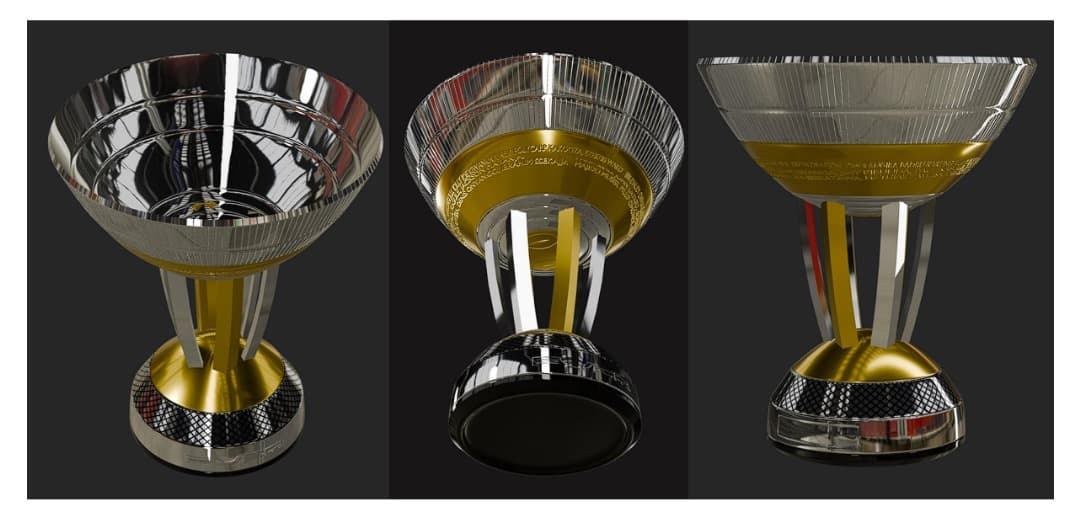
Uganda Cup Trophy
The Uganda Cup Trophy is conceived as a contemporary reinterpretation of a long-standing national symbol, preserving the recognizable identity of the historic trophy while re-rooting it in Ugandan cultural meaning. The upper form of the trophy is derived from the Ekibbo—a traditional Ugandan basket associated with offering, gratitude, and thanksgiving. In many Ugandan cultural contexts, the basket represents the act of giving and communal recognition, making it an appropriate vessel for celebrating achievement and honor within sport. Abstracted into a saucer-like form, the basket becomes both container and crown, holding the symbolic weight of victory. This upper element rests on six structural studs. The studs elevate the form, and beneath them, an inverted saucer completes the composition, grounding the object and stabilizing its vertical expression. The overall geometry deliberately retains the proportions and recognizable profile of the previous Uganda Cup Trophy, ensuring continuity and respect for its legacy. Rather than replacing the past, the design evolves it—balancing tradition and renewal within a single, cohesive object.

The Margherita — Uganda Premier League Trophy
The Margherita trophy is conceived as a symbolic representation of Uganda’s top-flight football competition, drawing inspiration from the country’s hills and mountain ranges. In this narrative, each competing team is imagined as a rising landscape, striving toward the highest point in the sky. The champion ultimately claims the summit—symbolized by an elevation of 5.11 kilometres above sea level, the highest attainable peak. The form of the trophy originates from the geometry of a football, stretched vertically along its axis to express ascent and ambition. This elongation is intersected horizontally at its upper chord, giving rise to a crescent-like silhouette reminiscent of a young moon—an emblem of emergence, renewal, and victory. Hexagonal and half-pentagonal patterns, abstracted from the football’s surface, articulate the body and reinforce its sporting origin. The elongated form rests on a semi-spherical base detailed with dimpled ball patches, grounding the upward motion of the trophy. Beneath this, two tiers provide visual and symbolic stability: the first bears the engraved identity of FUFA and the Uganda Premier League, while the lower glossy black base anchors the object firmly to its stand, emphasizing permanence. Crafted in silver, the original trophy stands at 511 millimetres in height—a precise dimensional reference to the conceptual peak of 5.11 kilometres, the Margherita, the highest peak of the Rwenzori Ranges. Designed in 2023 for FUFA, The Margherita is envisioned not merely as a prize, but as a sculptural embodiment of aspiration, competition, and national sporting identity.
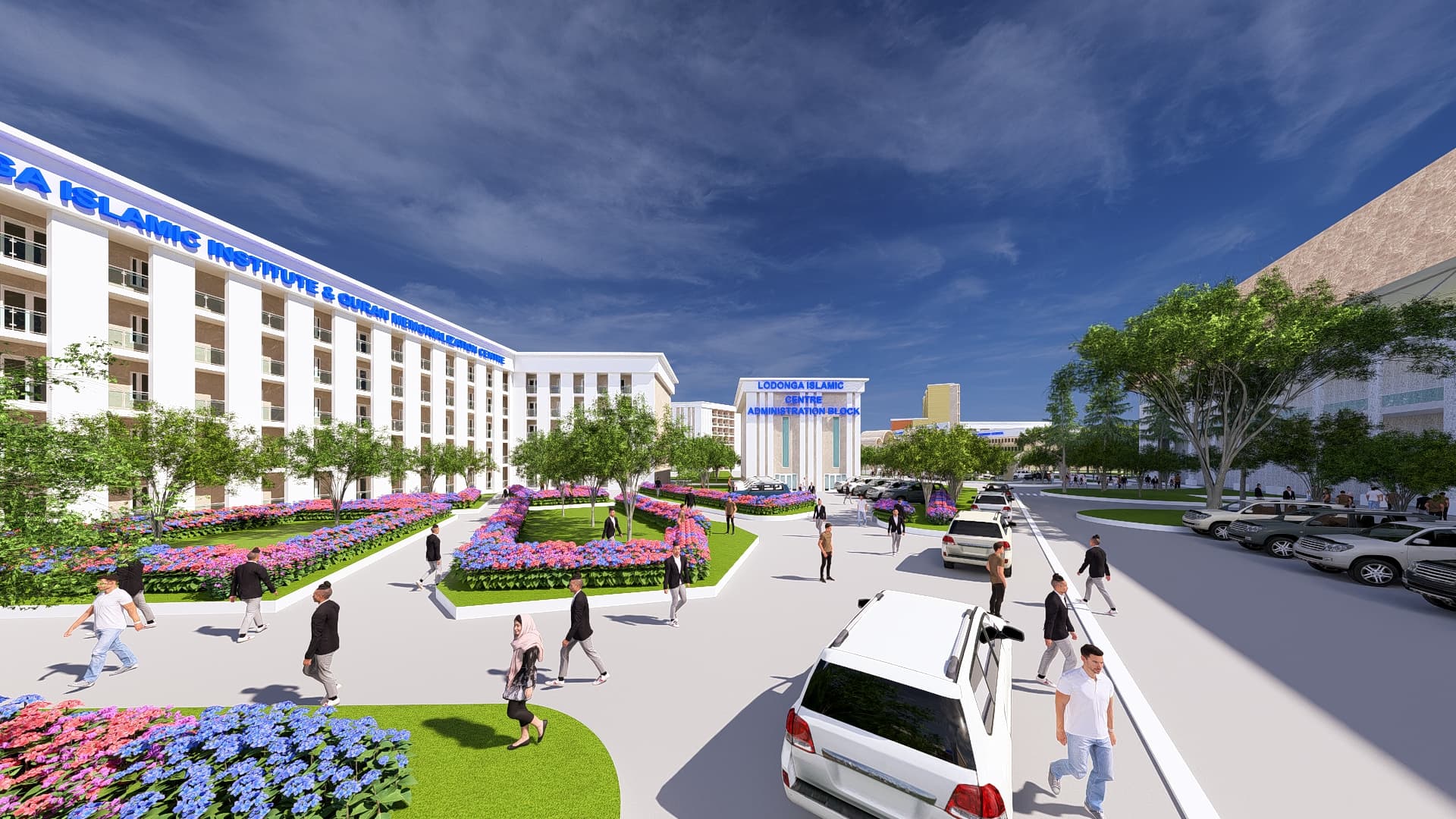
Lodonga Islamic Centre Complex
Conceived as a comprehensive spiritual and socio-civic landscape, the Lodonga Islamic Centre Complex is envisioned as a place where faith, knowledge, care, and daily life coexist within a unified spatial framework. Set across 325 acres, the master plan organizes religious, educational, and healthcare into a coherent environment rooted in Islamic values and long-term community growth. At the heart of the development sits the Noor Mosque, symbolically positioned as the spiritual anchor of the site. Its central location establishes a clear hierarchy, with learning institutions, social facilities, and public spaces unfolding outwards. This spatial organization reflects the role of faith as both a physical and moral center of communal life. The complex is designed to accommodate a wide spectrum of users, from students and worshippers to patients, families, and visitors. Educational institutions—ranging from Quran memorization centers and teacher training colleges to secondary schools and vocational institutes—are clustered while maintaining functional independence. Healthcare facilities, including a tertiary hospital and a nursing school, are strategically positioned to enhance accessibility and operational efficiency, reinforcing the site’s role as a regional service hub. Open spaces, gardens, and agricultural fields are interwoven throughout the master plan. These landscapes act as buffers between program zones, improve microclimate conditions, and provide places for reflection, recreation, and informal gathering. Sustainability is further embedded through the integration of a solar power plant and dedicated water and waste management infrastructure, ensuring long-term resilience and self-sufficiency.